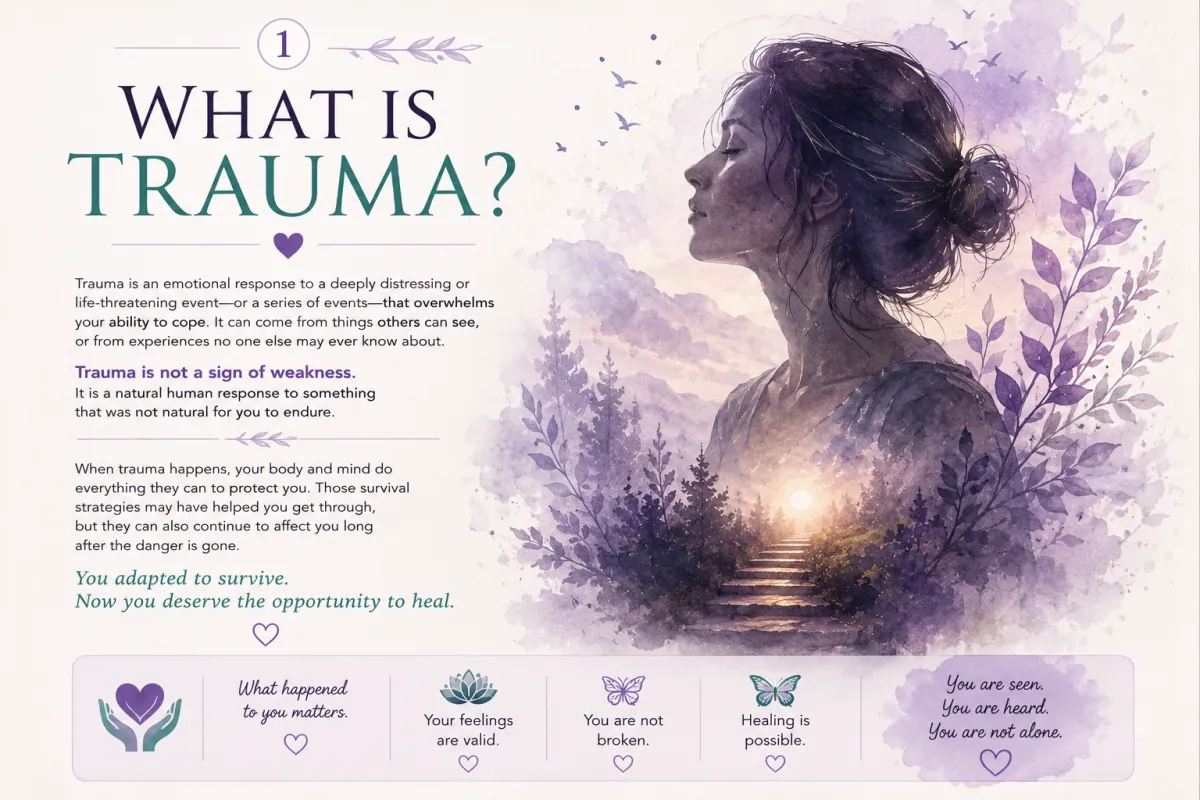
What Is Trauma?
Trauma is not simply something that happened to you. It is what happened inside you because of what you experienced.
Sometimes trauma comes from a single life-changing moment. Other times it develops quietly through months or years of emotional abuse, neglect, violence, betrayal, loss, illness, or living in constant survival mode. It can be caused by experiences that others witnessed, or by wounds that no one else ever knew existed.
Trauma changes more than memories. It can affect how safe you feel in the world, how you trust others, how you see yourself, and even how your body responds to everyday situations. You may find yourself constantly on guard, struggling to rest, questioning your own thoughts, or feeling emotionally disconnected. These are not signs that something is wrong with you. They are often signs that your mind and body have been working tirelessly to protect you.
One of the most painful parts of trauma is that many people begin to believe they should simply "get over it." Healing rarely works that way. Trauma is not a weakness to overcome. It is an injury that deserves understanding, compassion, and the opportunity to heal.
Here is the truth we hope you never forget:
You are not broken. You adapted to survive experiences that no one should have had to endure. Those survival strategies helped carry you this far. Now, you deserve the opportunity to heal, grow, and rediscover the parts of yourself that trauma tried to take away.
Before You Continue...
If you've ever wondered...
"Why can't I just move on?"
"Why do I react so strongly to certain situations?"
"Why do I feel exhausted all the time?"
"Why is it so hard to trust people?"
"Why do I feel like I've lost myself?"
You're not alone.
The answers often begin with understanding trauma, and understanding is one of the first steps toward healing.
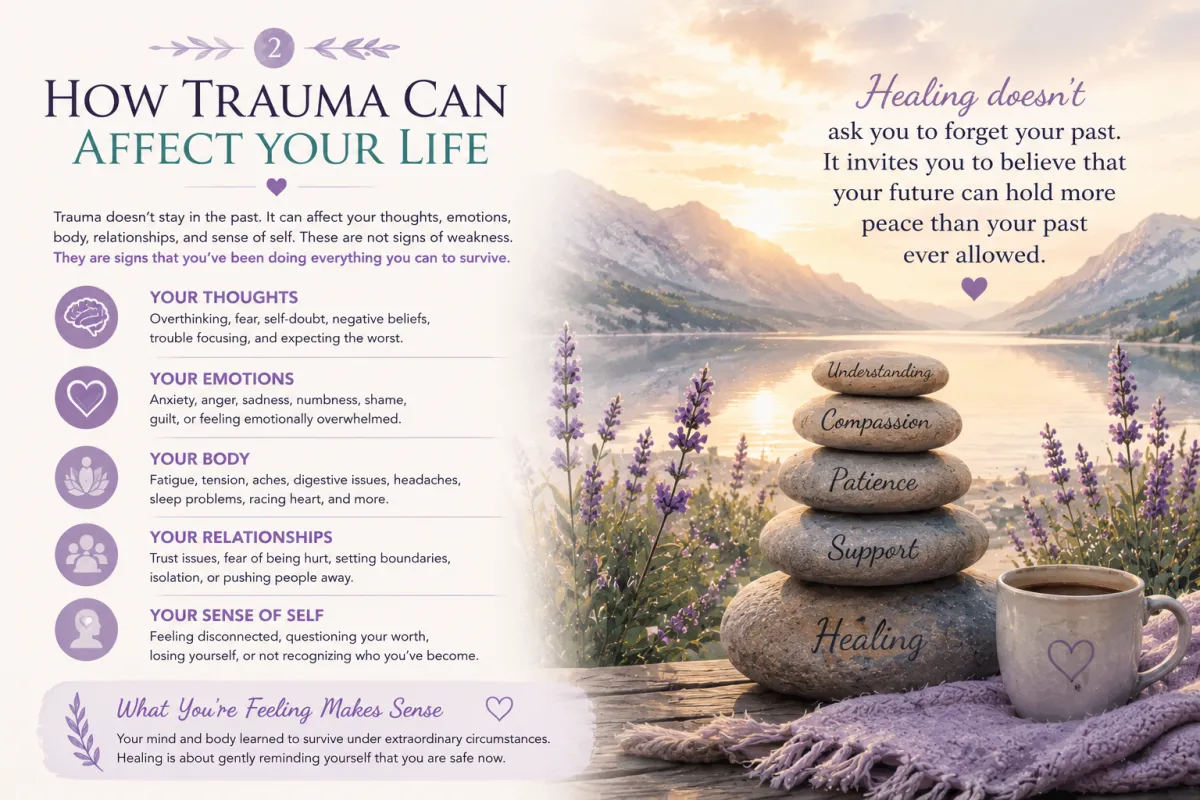
How Trauma Can Affect Your Life
Trauma does not stay neatly stored in the past. Even when the danger has ended, your mind and body may continue responding as though you still need to protect yourself. These responses are not personal failures. They are often survival strategies that once helped you make it through incredibly difficult circumstances.
Because trauma affects every person differently, there is no "right" way to experience it. Some people feel overwhelmed by emotions, while others feel disconnected from them. Some become hyperaware of everything happening around them, while others struggle to remember details or remain present. Whatever your experience, it is valid.
Trauma Can Affect...
Your Thoughts
You may find yourself constantly overthinking, expecting the worst, replaying painful memories, or struggling to quiet your mind. It can become difficult to concentrate, make decisions, or believe positive things about yourself.
Your Emotions
Trauma can leave you feeling anxious, angry, numb, ashamed, guilty, overwhelmed, or emotionally exhausted. Some days your emotions may feel unpredictable, while other days you may feel nothing at all.
Your Body
Trauma is not only emotional. It often lives in the body. Chronic fatigue, headaches, muscle tension, digestive problems, sleep disturbances, racing heartbeats, and unexplained aches are common experiences for many survivors.
Your Relationships
Trust can become difficult. You may fear being hurt again, push people away before they can leave, struggle to set healthy boundaries, or feel isolated even when surrounded by people who care about you.
Your Sense of Self
Perhaps one of the deepest wounds trauma leaves behind is the way it changes how you see yourself. Many survivors begin questioning their worth, doubting their instincts, or feeling disconnected from the person they once were. Healing often begins by remembering that your identity is far greater than what happened to you.
What You're Feeling Makes Sense
If you recognize yourself in any of these experiences, know this:
You are not weak.
You are not "too sensitive."
You are not failing.
Your mind and body learned to survive under extraordinary circumstances. Healing is not about erasing those experiences. It is about gently teaching yourself that you are safe enough to begin living beyond them.
Healing doesn't ask you to forget your past. It invites you to believe that your future can hold more peace than your past ever allowed.
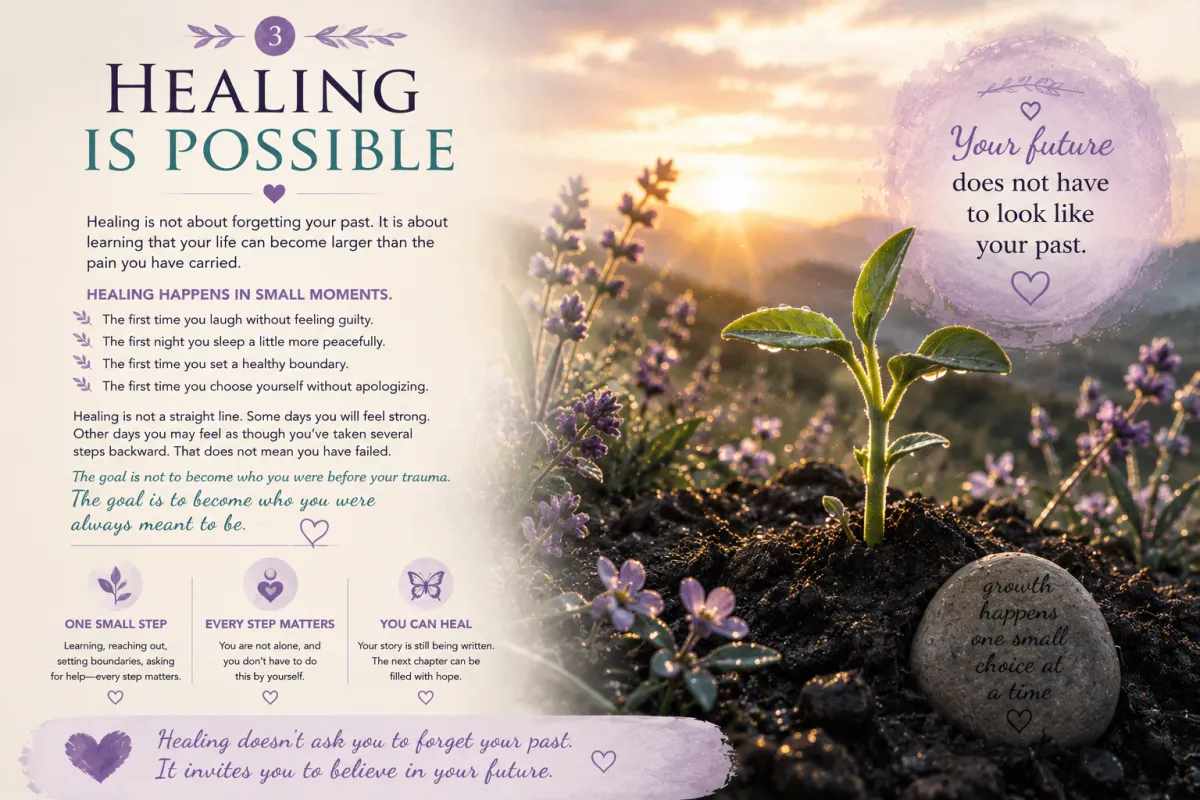
Healing Is Possible
If trauma has been part of your story, healing may feel impossible some days. You may wonder if you'll ever feel like yourself again, if you'll ever trust again, or if life will always feel this heavy.
Those questions are understandable.
But healing is not about pretending the past never happened. It is not about forgetting, minimizing, or simply "moving on." Healing is about learning that your life can become larger than the pain you have carried.
It happens in small moments.
The first time you laugh without feeling guilty.
The first night you sleep a little more peacefully.
The first time you set a healthy boundary.
The first time you choose yourself without apologizing.
Those moments may seem small, but they are often the beginning of profound transformation.
There is no perfect timeline for healing. Some days you will feel strong. Other days you may feel as though you've taken several steps backward. That does not mean you have failed. Healing is rarely a straight line. It is a journey filled with growth, setbacks, courage, and resilience.
The goal is not to become the person you were before your trauma.
The goal is to become the person you were always meant to be, carrying wisdom instead of fear and hope instead of survival alone.
What Healing Can Look Like
Healing may begin with one small step.
For you, that step might be:
Learning more about trauma.
Talking with someone who truly understands.
Reading a story that reminds you, you are not alone.
Practicing self-compassion instead of self-criticism.
Setting one healthy boundary.
Asking for help for the first time.
Believing that your future does not have to look like your past.
Every step matters.
Every step is progress.
Remember This:
Healing is not measured by how quickly you recover. It is measured by the courage to keep choosing hope, even on the days when hope feels far away.
Your story is still being written. The next chapter does not have to look like the last one.
Explore Trauma Recovery Resources
Voices of Hope

Read real stories from people who have discovered strength, resilience, and hope after trauma.
Peer Support
Connect with a Peer Support Specialist who understands through lived experience.
Resource Library

Explore our complete collection of tools, guides, downloads, and educational resources.
Articles & Guides
Understand trauma, healing, and recovery through compassionate educational resources.
Workbooks
Interactive workbooks created to help you process your experiences and move forward one step at a time.
Podcasts

Listen to survivors, professionals, and advocates share conversations that inspire hope and healing.

You Don't Have to Know Where to Begin
One of the hardest parts of healing is knowing what to do next. Should you read more? Talk to someone? Join a community? Start with a workbook? Listen to stories from people who understand?
The truth is, there isn't one perfect first step.
There is only your next step.
Whether you're living with the effects of trauma, supporting someone you love, rebuilding after abuse, navigating grief, or simply trying to make sense of what you're feeling, you deserve a place that meets you with compassion instead of judgment.
Take a deep breath. Explore what speaks to you. Move at your own pace.
Healing isn't about getting everything right. It's about continuing to move forward, one step at a time.
Maybe Your Next Step Is...
Learning something new.
Reading a survivor's story.
Listening to a conversation that helps you feel less alone.
🤝 Connecting with someone who truly understands.
💜 Simply believing that healing is possible.
Every path looks different.
Every journey matters.
And no matter where you're starting from...
There is hope.

You Belong Here
No matter what brought you here today, we're glad you found us. Maybe you're carrying the weight of trauma you've never spoken about. Maybe you're supporting someone you love and wondering if you're doing enough.
Maybe you're exhausted, overwhelmed, grieving, or simply searching for answers.
Wherever you are on your journey, you don't have to pretend you're okay here.
You don't have to explain why you're hurting.
You don't have to prove that your pain is real.
You don't have to have all the answers before reaching out.
Here, you are welcomed exactly as you are.
Healing isn't about becoming someone else.
It's about rediscovering the person who has always been there beneath the pain, fear, and survival. There is hope. There is healing. There are people who understand. And there is a place for you here.
A Gentle Reminder
Take one step today. Read one article. Listen to one conversation. Complete one workbook page. Reach out to one person. Give yourself permission to believe that tomorrow can feel different than today. Small steps create extraordinary change.
You have survived every difficult day that brought you here.
Now, let hope lead you toward what's next.
Start with one small thing
Here are ten free trauma and recovery resources to open, save, or print. You can take only what helps today. There is no perfect order and no pressure to finish them all.
These resources offer education and peer support. They do not replace emergency, medical, mental-health, legal, or individualized safety advice.